Algorithmic Fairness in Network Science
Satellite at NetSci 2026
Boston, USA
June 1, 2026
The Algorithmic Fairness in Network Science (FairNetSci) satellite explores the biases and disparities within networks and their implications on algorithmic outcomes. Network inequality refers to the structural biases, perception disparities, and persistent inequalities stemming from connection patterns among agents in a network. These biases shape individuals' social views, behavioural decisions, and influence, highlighting the real-world impact of network structures.
Algorithms designed without addressing such biases risk producing unfair outcomes, particularly for minority groups. For example, link prediction algorithms may fail to accurately predict connections for smaller or less connected groups due to structural biases. Furthermore, recommendation systems can inadvertently amplify existing inequalities through their learning processes. However, with thoughtful design, algorithms can mitigate these biases and promote fair outcomes for all individuals and groups, irrespective of their size or type.
This satellite aims to bring together experts from diverse fields, including computer science, data science, social science, mathematics, and network science, to collaboratively explore and address these challenges. The satellite will feature Keynote, invited, and contributed lightning talks.
This satellite event also allows junior researchers to showcase their work, including graduate students, postdocs, and young professors. A Best Student Paper Award will be presented to the most outstanding submission led by a student.
Call for Abstracts
Join us in the beautiful city of Boston for the “Algorithmic Fairness in Network Science” satellite at the NetSci-26 event. This session aims to bring together researchers and practitioners from diverse fields to explore inequality in network structures and dynamics, as well as the development of fair and ethical algorithms in network science.
Submissions from junior researchers, including graduate students, postdocs, and pre-tenure faculty, are especially encouraged. The submissions will be accepted for regular talks, lightning talks, and poster presentations.
Scope
We invite submissions on understanding network inequalities and designing fair algorithms in network science. Contributions are welcome on, but not limited to, the following topics:
- Structuring Inequalities in Networks
- Measuring and mitigating biases in network algorithms
- Fairness in SNA methods, such as community detection, link prediction, and influence maximisation
- Disparities in access, visibility, or resources in social and information networks
- Algorithmic fairness in recommender systems and social network platforms
- Case studies on the real-world impact of inequalities in networks
- Ethical considerations in the design and deployment of network algorithms
- Strategies for ensuring inclusivity and equity in network-driven decision-making
This session does not have archival proceedings. Submissions may include:
- Recently published works
- Papers under peer review (e.g., arXiv papers)
- Work in progress
Submission
Submission Format
Option 1 — Preprint/Publication Submission: Submit a PDF of your publication or preprint. This option is straightforward and ideal for authors without copyright restrictions or concerns about sharing their paper/preprint on another platform.
Option 2 — Abstract Submission: For abstract submission, we recommend 1 to 3 pages, with unlimited pages for references and figures, but longer submissions are also accepted. You may use any template of your choice.
Submission Portal
Enter your submission using the following Google Form: https://forms.gle/wwwx1BR85dBktGBB9
Special Issue
Selected high-quality contributions presented at the conference will be invited for submission to a special journal issue associated with the event, subject to the authors' interest. Invited authors will receive further details regarding the submission process, timeline, and participating journals after the conference. All submitted manuscripts will undergo the respective journal’s standard peer-review procedure.
Important Dates
- February 1: Call for abstracts is released
- February 22: Round 1 deadline
- February 28: Round 1 acceptance notice
- March 07: Round 2 deadline (dependent on the number of accepted papers from Round 1)
- March 15: Round 2 acceptance notice
- March 20: Early bird registration deadline
Submissions for contributed talks will be evaluated based on their relevance to the satellite theme, originality, novelty, and scientific quality. Notification of acceptance will be sent by February 28 and March 15, 2026. Upon acceptance, at least one author must register and attend the session to present the work.
If you have any queries, please email us at fairnetsci@gmail.com.
Keynote Speakers
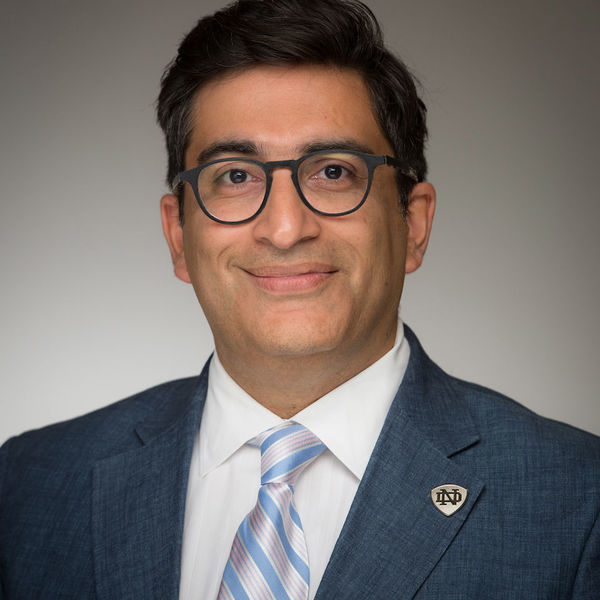
Prof. Dr. Nitesh Chawla
Title: Rootless Intelligence: Do LLMs Actually Believe Anything?
Abstract: The rise of Large Language Models (LLMs) has reignited the debate over whether these systems exhibit human-level cognition, yet little attention has been paid to a structural pillar of human intelligence: core beliefs. In humans, these foundational truths provide a stable anchor for our worldview and typically resist debunking, as abandoning them would require a total shift in our perception of reality. In this keynote, I present our research into whether LLMs hold anything akin to these commitments by utilizing a probing framework called Adversarial Dialogue Trees (ADTs). Our results indicate that all current models lack the stable cognitive foundation necessary for true human-level intelligence
Bio: Prof. Dr. Nitesh Chawla is the Frank M. Freimann Professor of Computer Science and Engineering and the Lucy Family Director for Data & AI Academic Strategy, leading the Data, AI, and Computing Initiative at the University of Notre Dame. His research is focused on artificial intelligence, data science, and network science, and is motivated by the question of how technology can advance the common good through convergence. He is a Fellow of: the Institute of Electrical and Electronics Engineers (IEEE); the Association of Computing Machinery (ACM); the American Association for the Advancement of Science (AAAS); and the Association for the Advancement of Artificial Intelligence (AAAI). He is the recipient of multiple awards, including the National Academy of Engineers New Faculty Fellowship, IEEE CIS Outstanding Early Career Award, Rodney F. Ganey Community Impact Award, IBM Big Data & Analytics Faculty Award, IBM Watson Faculty Award, and the 1st Source Bank Technology Commercialization Award. He is a serial entrepreneur having (co-)founded multiple start-ups
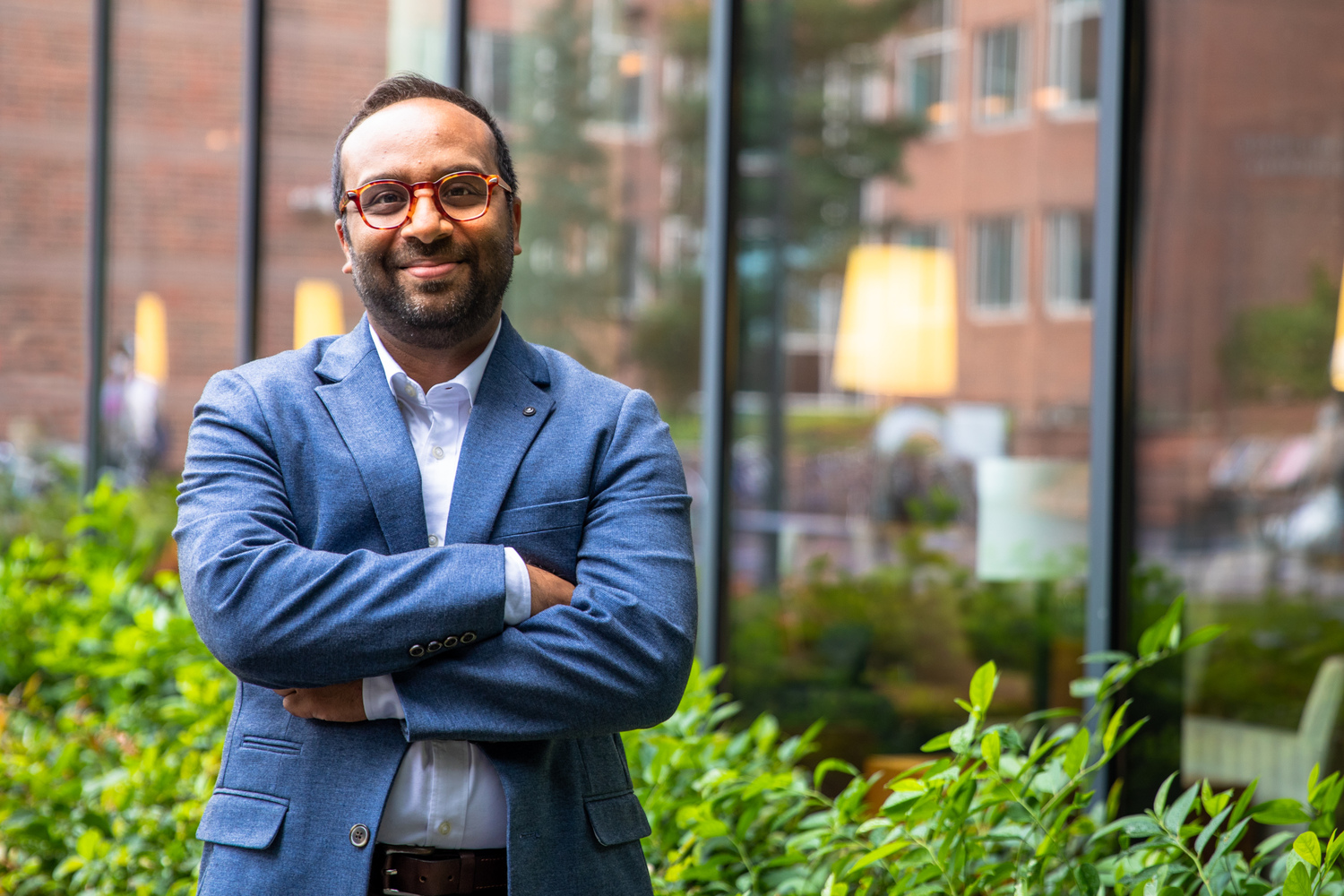
Prof. Dr. Sharad Goel
Title: Label bias, rubric embeddings, and everything but the kitchen sink
Abstract: In designing statistical decision aids, many scholars promote a "kitchen sink" approach, reasoning that more information yields more accurate predictions. We show, however, that this rationale often fails when algorithms are trained to predict a proxy of the true outcome, for instance, past hiring decisions as a proxy for actual job performance. To address this problem, we introduce "rubric embeddings", which represent the data as a large set of interpretable features that are directly related to the true label. We show -- both empirically and theoretically -- that this approach can mitigate label bias, simultaneously improving both the equity and quality of decisions
Bio: Prof. Dr. Sharad Goel is a Professor of Public Policy at Harvard Kennedy School. He looks at public policy through the lens of computer science, bringing a computational perspective to a diverse range of contemporary social and political issues, including education, the delivery of public benefits, and the equitable design of algorithms. Sharad is the founder and director of the Harvard Computational Policy Lab, an interdisciplinary team of researchers and engineers that use technology to solve public problems. Prior to joining Harvard, Sharad was on the faculty at Stanford University, with appointments in management science & engineering, computer science, sociology, and the law school. Sharad holds an undergraduate degree in mathematics from the University of Chicago, as well as a master’s degree in computer science and a doctorate in applied mathematics from Cornell University

Dr. Jundong Li
Title: Algorithmic Fairness of Graph Machine Learning: Optimization, Explanation, and Certification
Abstract: As graph machine learning (GML) moves from academic benchmarks into consequential decision-making pipelines — credit scoring, bail decisions, fraud detection, clinical risk assessment — a fundamental tension has come into focus: the very message-passing mechanisms that make graph neural networks powerful also propagate and amplify the social biases embedded in the underlying network, turning structural inequality into algorithmic discrimination. Confronting this challenge demands more than a single technical fix; it requires a principled framework that can reduce bias at its source, explain how bias is introduced through graph structure, and guarantee that the fairness we achieve holds under adversarial conditions. In this talk, I will present a line of work that advances the algorithmic fairness of GML along these three complementary axes. First, on optimization, I will describe a model-agnostic approach that debiases the input attributed network itself — measuring and mitigating bias in both node attributes and graph structure — so that any downstream GNN inherits improved fairness without bespoke retraining. Second, on explanation, I will present a post-hoc, instance-level structural explainer that identifies the edges most responsible for biased predictions and, separately, those that most support fair ones, turning fairness diagnosis into an actionable debugging tool. Third, on certification, I will discuss how to provide theoretical guarantees that the fairness of a deployed GNN cannot be corrupted by attackers operating within a bounded perturbation budget on nodes or edges, moving the field from empirical defense toward provable trustworthiness
Bio: Dr. Jundong Li is an Associate Professor at the University of Virginia, with joint appointments in the Department of Electrical and Computer Engineering and the Department of Computer Science. Since 2022, he has also served as a part-time Research Scholar at LinkedIn. His research spans data mining, machine learning, and artificial intelligence, with a particular focus on graph machine learning, trustworthy and safe machine learning, and large language models. He has authored more than 200 papers in leading venues, collectively cited over 20,000 times. His work has been recognized with four early-career awards — the ICDM Tao Li Award (2025), the SIGKDD Rising Star Award (2024), the PAKDD Early Career Research Award (2023), and the NSF CAREER Award (2022) — as well as the PAKDD Best Paper Award (2024), the SIGKDD Best Research Paper Award (2022), and multiple industry faculty research awards
Invited Speakers
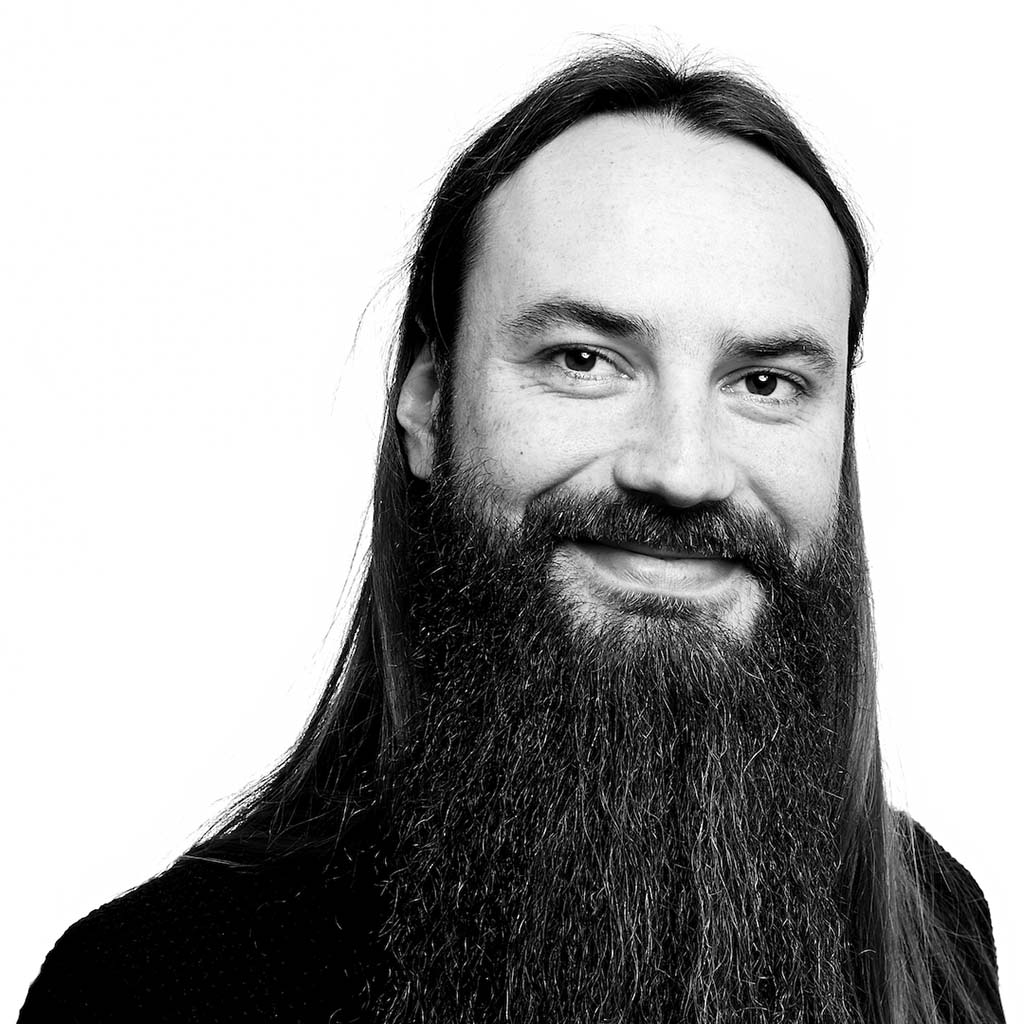
Dr. Piotr Sapieżyński
Title: Making platforms accountable, one audit at a time
Abstract: Over the last decade, online platforms such as Facebook, TikTok, and X have dramatically increased their reliance on algorithmically curated feeds. Each user is now exposed to a highly personalized selection and ordering of content, often coming from creators and sources that they did not actively choose to view. Complex, interacting AI-based systems make these selection decisions in ways that optimize that platforms’ goals—such as maximizing user engagement or time spent on platform—but do not necessarily align with users’ autonomy and welfare. At the same time, regulators are poorly equipped to study these platforms, and the companies that operate them are often dis-incentivized from investigating the societal implications of their products due to potential legal liability.As a result, to fully understand how these platforms are impacting end users, communities, and society as a whole, it is necessary to have independent, third party audits. In this talk, I provide an overview of my work in this space, showing how I have developed and deployed methods that grant us insights into the platforms’ inner workings. I discuss how we can begin to understand the societal implications of online content recommendation algorithms and how we use this knowledge to hold the platforms accountable. I will focus on potentially discriminatory and anti-democratic consequences of ad delivery optimization at Facebook/Meta, and explain how the lessons we learned can be applied in the context of other online platforms
Bio: Dr. Piotr Sapiezynski is an Assistant Professor at the Technical University of Denmark and an Assistant Research Professor at Northeastern University. His focus is on bringing transparency to algorithmic products, and accountability to platforms that operate them, such that societal harms of Machine Learning and AI can be minimized, and the positive impacts equitably distributed. His work has appeared in top-tier conferences (incl. FAccT, AIES, CSCW, IMC) and prestigious journals (incl. Political Research Quarterly and Nature journals: Scientific Reports, Human Behaviour, Scientific Data, and Climate Change). His work has been covered in the international press, including The Economist, Washington Post, WIRED, and Propublica. He has appeared before the House Financial Services Committee in the US, and the European Parliament’s Internal Market and Consumer Protection Committee. He has also served as an expert for the US Department of Justice in their first case charging an algorithm with violations of the Fair Housing Act

Kate Barnes
Title: Edge interventions can mitigate demographic and prestige disparities in the Computer Science coauthorship network
Abstract: Social factors such as demographic traits and institutional prestige structure the creation and dissemination of ideas in academic publishing. One place these effects can be observed is in how central or peripheral a researcher is in the coauthorship network. Here we investigate inequities in network centrality in a hand-collected data set of 5,670 U.S.-based faculty employed in Ph.D.-granting Computer Science departments and their DBLP coauthorship connections. We introduce algorithms for combining name- and perception-based demographic labels by maximizing alignment with self-reported demographics from a survey of faculty from our census. We find that women and individuals with minoritized race identities are less central in the computer science coauthorship network, implying worse access to and ability to spread information. Centrality is also highly correlated with prestige, such that faculty in top-ranked departments are at the core and those in low-ranked departments are in the peripheries of the computer science coauthorship network. We show that these disparities can be mitigated using simulated edge interventions, interpreted as facilitated collaborations. Our intervention increases the centrality of target individuals, chosen independently of the network structure, by linking them with researchers from highly ranked institutions. When applied to scholars during their Ph.D., the intervention also improves the predicted rank of their placement institution in the academic job market. This work was guided by an ameliorative approach: uncovering social inequities in order to address them. By targeting scholars for intervention based on institutional prestige, we are able to improve their centrality in the coauthorship network that plays a key role in job placement and longer-term academic success
Program
| TIME | SPEAKER | TITLE |
|---|---|---|
| 9:15 – 9:30 | Dr. Akrati Saxena | Opening Remarks |
| 9:30 – 10:00 | Prof. Dr. Nitesh Chawla | Rootless Intelligence: Do LLMs Actually Believe Anything? |
| 10:00 – 10:30 | Prof. Dr. Piotr Sapieżyński | Making platforms accountable, one audit at a time |
| 10:30 – 11:00 | ☕ Coffee Break | |
| 11:00 – 11:30 | Prof. Dr. Sharad Goel | Label bias and everything but the kitchen sink |
| 11:30 – 12:00 | Prof. Dr. Jundong Li | Algorithmic Fairness of Graph Machine Learning: Optimization, Explanation, and Certification |
| 12:00 – 12:20 | Kate Barnes | Edge interventions can mitigate demographic and prestige disparities in the Computer Science coauthorship network |
| 12:20 – 12:30 | Closing Remarks | |
Organizers
Dr. Akrati Saxena
Dr.Akrati Saxena is an assistant professor at LIACS, the computer science and AI institute of the Faculty of Science of Leiden University. She leads the AlFa (Algorithmic Fairness) research group, which develops fairness-aware heuristic, approximation, machine learning, and deep learning-based methods for complex network data. Her research interest lies at the intersection of Social Network Analysis, Complex Networks, Computational Social Science, Data Science, and Algorithmic Fairness. Her current work focuses on understanding inequalities in complex networks and advancing fairness-aware algorithms in network and data science, including analyzing biases in existing systems, defining fairness constraints and evaluation metrics, and designing fair computational frameworks. In addition to her research, she serves on the Diversity Committee at LIACS, contributing to efforts that foster inclusion and equity within the academic community.

Dr. Frank Takes
Dr. Frank Takes is an associate professor at LIACS, the computer science and AI institute of the Faculty of Science of Leiden University. His research interest is in network science, in particular, the development of algorithms for the analysis of large-scale (social) network data, with applications in science studies, economics, and computational social science. He is the head of the Leiden Computational Network Science research group, academic co-director of the Dutch PLANET-NL platform for population-scale social network analysis, and board member of the Dutch Network Science Society. Since 2022, he has been the director of education of the LIACS bachelor programmes Informatica (Computer Science) and Data Science & Artificial Intelligence, and a member of the institute's management team.
Volunteers
-
Shikha Mallick
University of Victoria, BC, Canada -
Kirtidev Mohapatra
IIT Bhilai, India

